The Art of Stillness: Crafting the Lotus Kusudama
Why Start with Paper Folding?
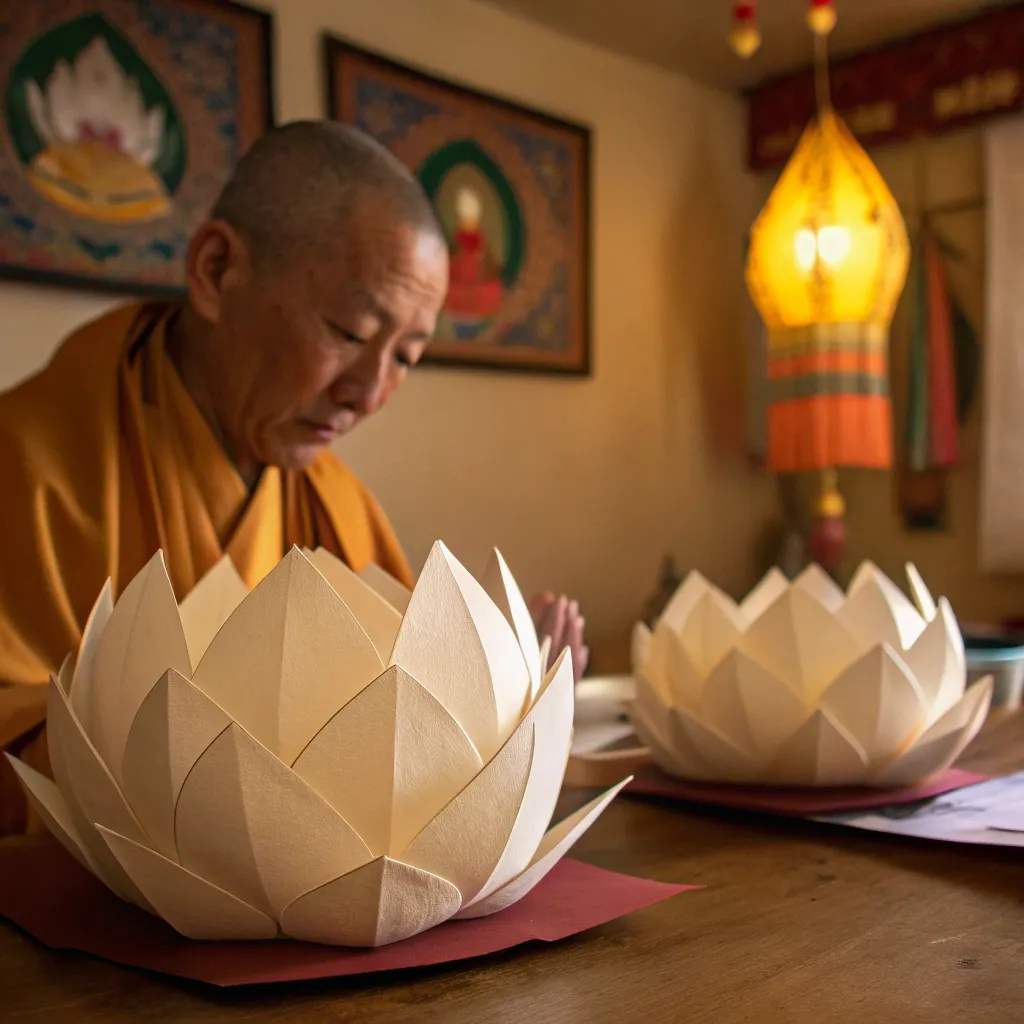
When was the last time you lost yourself in a creative act so completely that time seemed to pause? For many, crafting a Lotus Kusudama offers just that experience. More than a decorative paper model, it is a meditative ritual, inviting focus, patience, and presence into every fold.
Derived from the Japanese tradition of kusudama (meaning “medicine ball”), this paper creation combines origami precision with symbolic beauty, resembling a lotus in full bloom—a universal symbol of spiritual awakening.
Step-by-Step: Folding the Lotus with Intention
Materials You’ll Need
To begin, gather six identical squares of paper and a tube of paper glue. While the design may look intricate, the steps are simple when approached with calm and care.
Folding the Foundation
Start by folding each square diagonally and then horizontally and vertically, creating creases that will guide you. These early folds serve as the structural roots of your lotus, just as early meditation builds the base for inner calm.
Next, bring the corners together in sequence, gradually shaping a central square and marking key crease points. This transforms the flat paper into a 3D form with potential waiting to unfold.
Shaping the Petals
Now the lotus takes form. Begin opening the corners and flipping edges to shape each petal symmetrically. Gently bend and tuck the top edges inward, adjusting creases to give the petals a soft, natural curvature. Think of each fold as a breath of awareness, refining both the model and your focus.
Repeat the process six times to complete six petals—each one a small, mindful masterpiece.
The Final Touch: Assembly and Appreciation
Once all six units are ready, assemble them in a circular pattern with four around the middle and two capping the top and bottom. Use glue sparingly to connect at the pointed ends. As the flower comes together, you’ll see how precision and patience transform paper into something profound.
With every fold and press, you’re not just building a shape—you’re building a state of mind.
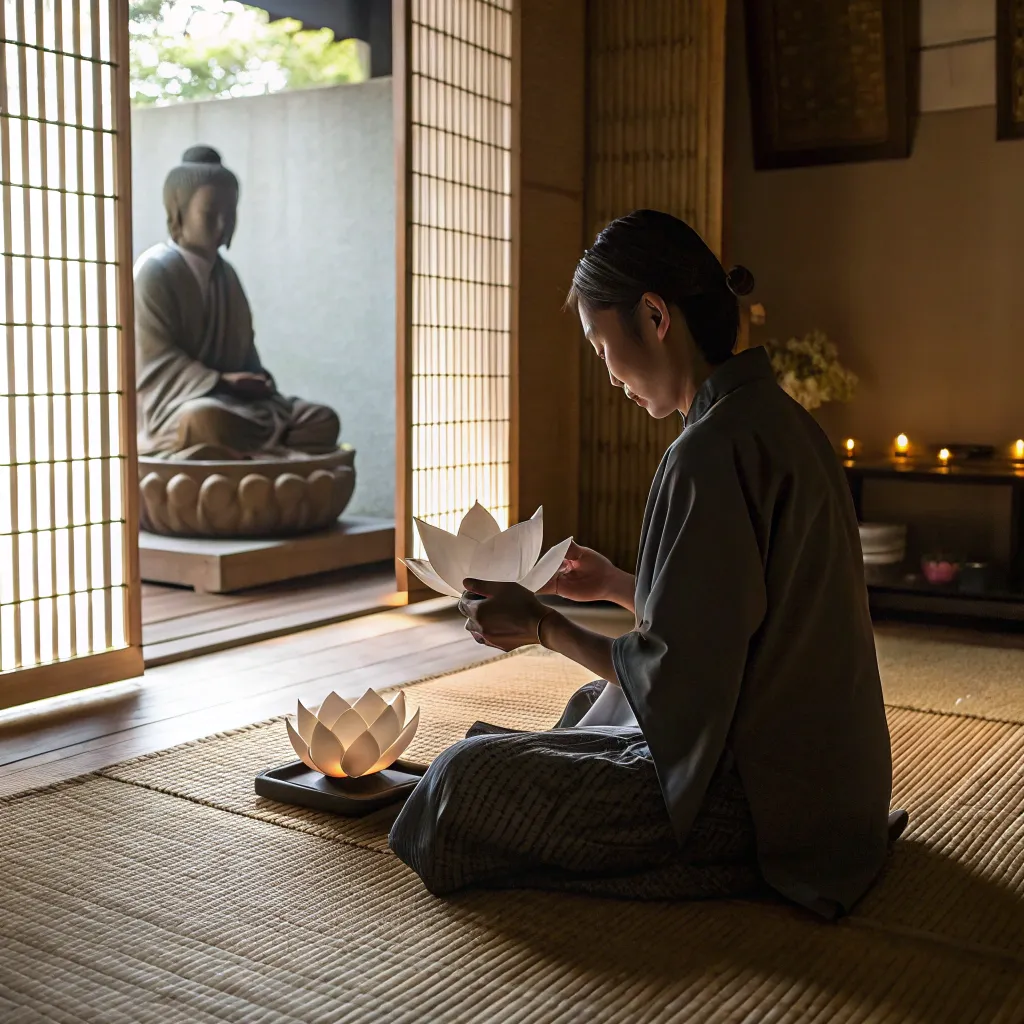
Table: Quick Reference for Lotus Kusudama Crafting
| Step | Action |
|---|---|
| Materials | Six squares of paper, paper glue |
| Initial Folds | Diagonal and half folds to create guidelines |
| Base Shaping | Bringing corners down and forming a square |
| Petal Formation | Flipping corners, bending creases, and tucking edges |
| Final Petal Detail | Elevating edges, opening folds to reveal the central form |
| Assembly | Glue six units—four around, two at top and bottom |
| Symbolism | Lotus = purity, patience, spiritual growth |
From Folds to Focus: The Transition to Mandalas
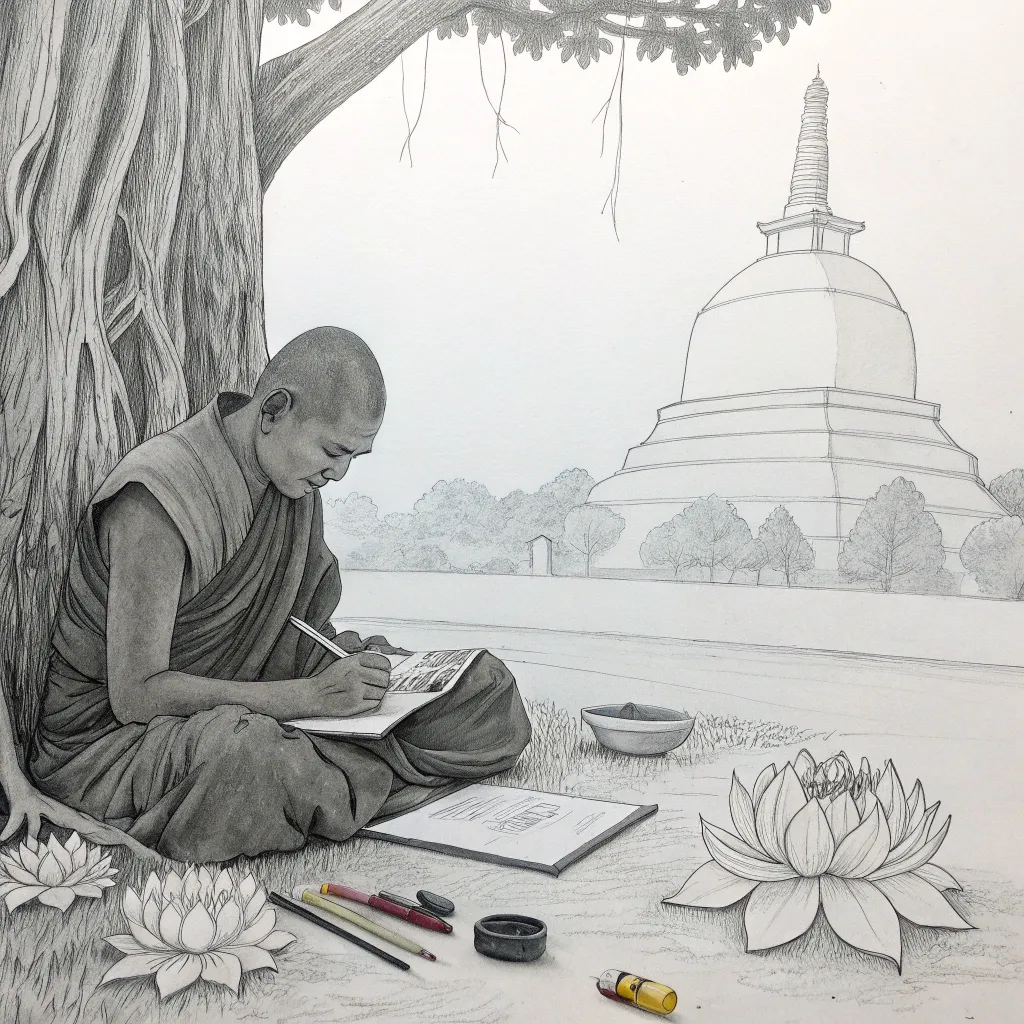
The Next Step in Your Meditative Practice
Once your Lotus Kusudama is complete, you may find yourself asking: What now? The answer lies in the natural continuation of focused creation—the world of mandalas.
While the Kusudama roots you in manual presence, mandalas take you on a visual and symbolic journey inward. Like the lotus, mandalas are rich in spiritual meaning and make ideal companions for deepening your mindfulness practice.
Mandalas: Sacred Circles of Self-Discovery
What Is a Mandala?
The word mandala comes from Sanskrit, meaning “circle,” but in practice, it’s far more than a shape. A mandala is a symbolic representation of the universe, the inner self, and the path toward spiritual understanding. These intricate designs—made of repeating patterns, shapes, and symbols—are often used in meditation to focus attention and quiet the mind.
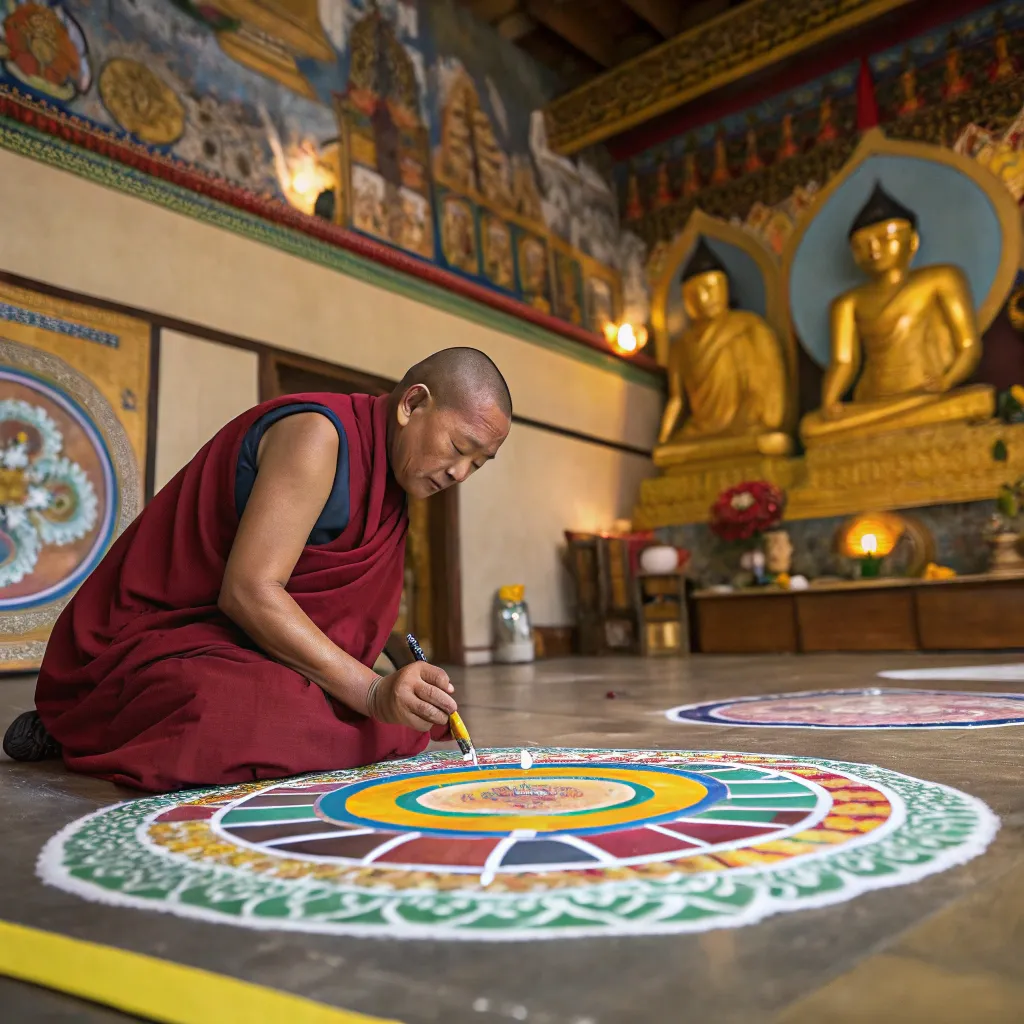
Traditionally found in Buddhist and Hindu cultures, mandalas also appear across global traditions, from Christian rose windows to Indigenous sand drawings. Among them, some Buddhist mandalas eg the Kalachakra and Mandala of Avalokiteshvara, serve as elaborate visual guides to cosmic and personal insight. Despite their diversity, they all share a central idea: moving from the outer world into inner stillness.
Mandalas and Meditation: A Natural Pair

Why Mandalas Work as Meditation Tools
When you meditate on a mandala, your eyes are drawn to its center. This visual focus mirrors the inward movement of attention, making it easier to let go of distractions. In Tibetan Buddhism, elaborate sand mandalas are used as tools to cultivate presence and accept impermanence. Some Buddhist mandalas eg those created in sacred rituals are designed to be dismantled, symbolizing the temporary nature of all things.
Just as each fold in a Kusudama grounds your awareness, each detail in a mandala anchors your attention—building concentration one line at a time.
Creating Your Own Mandala
The Process Is the Practice
You don’t need advanced drawing skills to create a mandala. What you need is intention, stillness, and patience. Begin with a blank circle. Decide on patterns that speak to you—spirals, petals, triangles—and let them radiate outward or inward.
Each shape and color can reflect something personal:
- Blue might symbolize calm
- Red may represent vitality
- Lotus petals can recall your Kusudama practice
As you draw, you’ll find yourself slipping into a meditative state. The repetition of shapes calms the nervous system, and the creative process becomes a quiet dialogue between your hand and your heart.
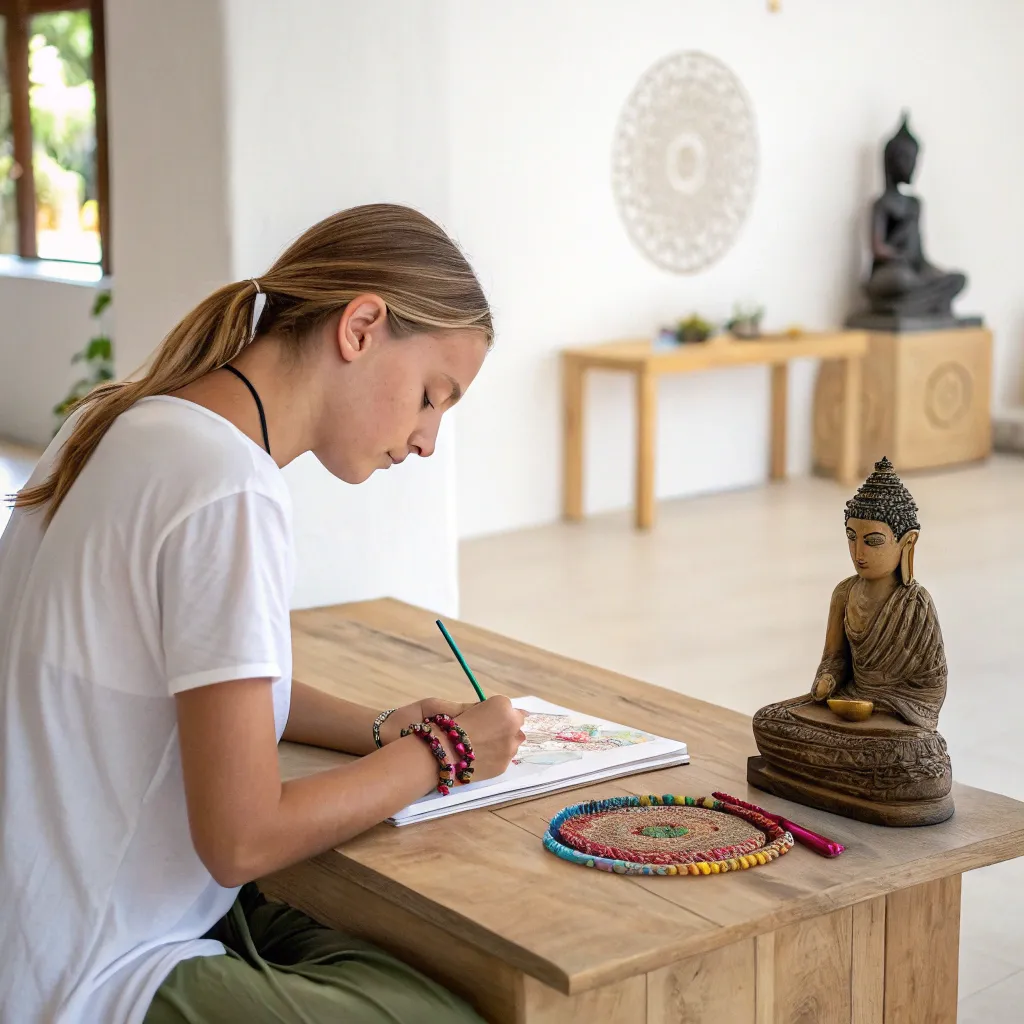
Tools and Materials for Mandala-Making
| Material | Purpose |
|---|---|
| Drawing compass | Helps create symmetrical, even circles |
| Ruler and pencil | Guides for structure and precision |
| Colored pencils or markers | Brings your personal energy and intention into the design |
| Watercolors | Adds a soft, meditative texture, ideal for expressive mandalas |
| Sand or chalk | Used in temporary mandalas to reflect impermanence |
Creating a mandala isn’t about perfection—it’s about presence. Whether using ink, pencil, or sand, what matters is the experience of focused creation.
Mandalas Beyond the Canvas
Art Meets Awareness
Mandalas aren’t limited to personal meditation. They are used in therapy, education, spiritual retreats, and even in architectural design. Psychologist Carl Jung used mandalas as a tool for mapping the unconscious mind. Today, some Buddhist mandalas eg found in Zen temples and Vajrayana ceremonies are used in healing, education, and creative expression.
Creating your own mandala can bring insights that surprise you—about your thoughts, your balance, and what you truly value.
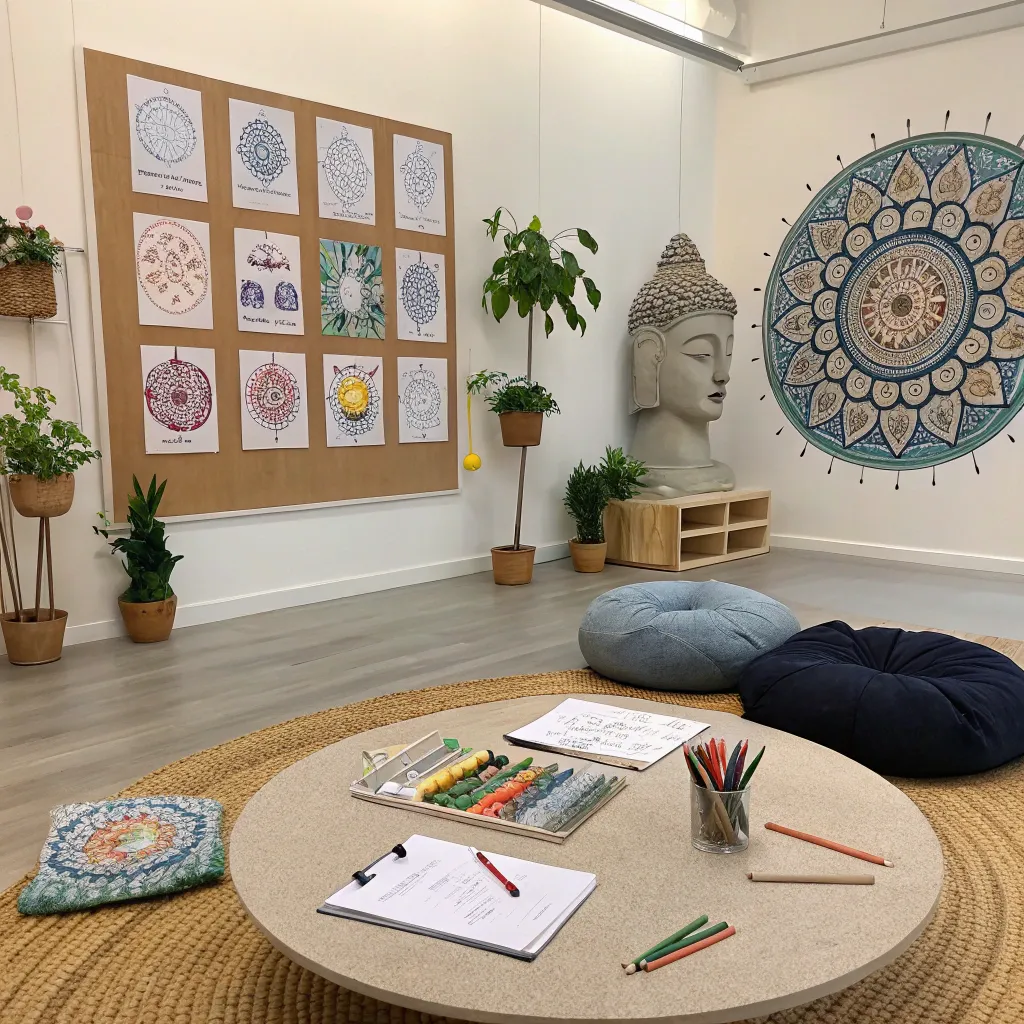
From Petals to Patterns: A Complete Meditative Journey
What began with the folding of a lotus now blooms into the geometric expression of a mandala. Both practices rely on pattern, repetition, and gentle focus, and both serve as pathways to deeper awareness.
Whether you’re constructing a Kusudama or sketching a mandala, you are participating in a timeless form of meditation—one that involves your hands, your breath, and your intention.
In a world filled with noise and speed, these simple practices invite us to slow down, go inward, and reconnect with what truly matters.
Final Thoughts: Bringing the Practice into Everyday Life
Meditation Through Creativity
You don’t need a formal meditation cushion or hours of silence to find peace. Through creative acts like Kusudama folding and mandala drawing, you bring mindfulness into motion. These arts train the mind to notice the present moment, one breath, one fold, one line at a time.
Let your practice be personal and evolving. Your first Kusudama may not be perfect. Your first mandala may not be symmetrical. That’s okay. The beauty lies in the process—and in the stillness it brings.
Summary Table: Kusudama vs. Mandala as Meditation Tools
| Element | Lotus Kusudama | Mandala Creation |
|---|---|---|
| Origin | Japanese paper-folding tradition | Sanskrit/Buddhist visual meditation |
| Focus Style | Tactile and structural | Visual and symbolic |
| Tools | Paper, glue, fingers | Pencil, compass, color tools, sand |
| Symbolism | Lotus: purity, unfolding, awakening | Circle: wholeness, journey, unity |
| Meditation Function | Builds patience, structure, breath focus | Enhances focus, reflection, emotional insight |
| Ideal For | Beginners to meditative crafting | Visual learners, inner reflection |