The Spiritual Evolution of the Buddha
From Prince to Sage
The story of Siddhartha Gautama is not just an ancient biography—it’s a timeless reflection of human transformation. Born into royalty and destined for comfort, he turned away from worldly luxuries to uncover the roots of suffering and the path to liberation. This journey, captured vividly through art and sacred texts, remains a guiding light for millions seeking peace, purpose, and clarity.
A Sacred Beginning
Siddhartha’s Birth in Lumbini
In the serene gardens of Lumbini, under a blooming sal tree, Queen Mahamaya gave birth to a child unlike any other. It was May, a month symbolic of renewal, when Siddhartha Gautama entered the world. His birth was no ordinary event—it was said to be accompanied by signs of cosmic harmony. Prophets foretold he would either become a great king or a spiritual leader who would change the course of history.
Did you know? According to Buddhist texts, Siddhartha took seven steps immediately after birth, each step blossoming with a lotus flower beneath it.
The Palace Life: A Gilded Cage
Though raised in the royal halls of Kapilavatthu, surrounded by opulence, music, and luxury, Siddhartha couldn’t ignore the quiet dissonance in his soul. His father, hoping to shield him from the harsh realities of life, enclosed him in beauty and youth. But peace built on illusion is fragile.
A Sudden Awakening: The Four Sights
Encounters That Changed Everything
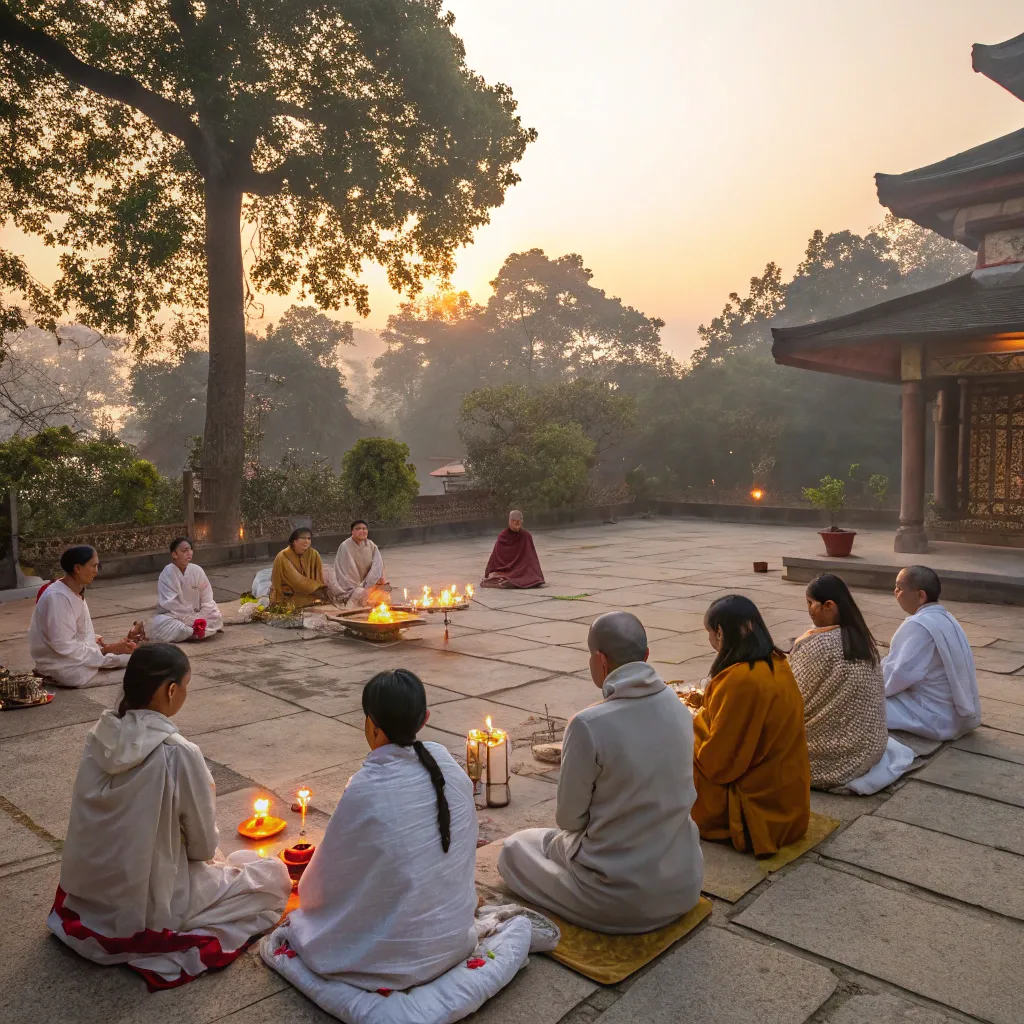
On a fateful journey beyond palace walls, Siddhartha came face to face with life’s unfiltered truths: an old man, a sick person, a corpse, and an ascetic. These sights shattered the illusion of permanence and planted the seeds of spiritual inquiry.
Each sight peeled away a layer of comfort, revealing a core question: Is there a way to escape suffering?
The Great Renunciation: A Prince Walks Away
At age 29, Siddhartha made a choice that would redefine his legacy. In the still of the night, he left behind his wife, son, and royal privilege to live as a wandering seeker. This departure—known as the Great Renunciation—was not a rejection of love but a sacrifice made in search of a higher truth.
The Path of Self-Denial and Realization
Years of Austerity and a Turning Point
For six years, Siddhartha embraced extreme asceticism—eating just enough to survive, meditating for hours, and denying all bodily comfort. His resolve was unshaken, but eventually, he saw that suffering alone did not lead to awakening. Enlightenment could not grow from starvation.
Takeaway: Even in spiritual practice, extremes are misleading. Balance is key.
The Middle Way and Enlightenment Under the Bodhi Tree
Beneath the Bodhi tree in Buddhagaya, Siddhartha found clarity. Rejecting both indulgence and self-punishment, he meditated deeply, discovering the Middle Way—a balanced approach to life. After a long night of profound insight, he awakened as the Buddha: “the awakened one.”
The Buddha Begins to Teach
Sharing the Dharma: First Sermon in Isipatana
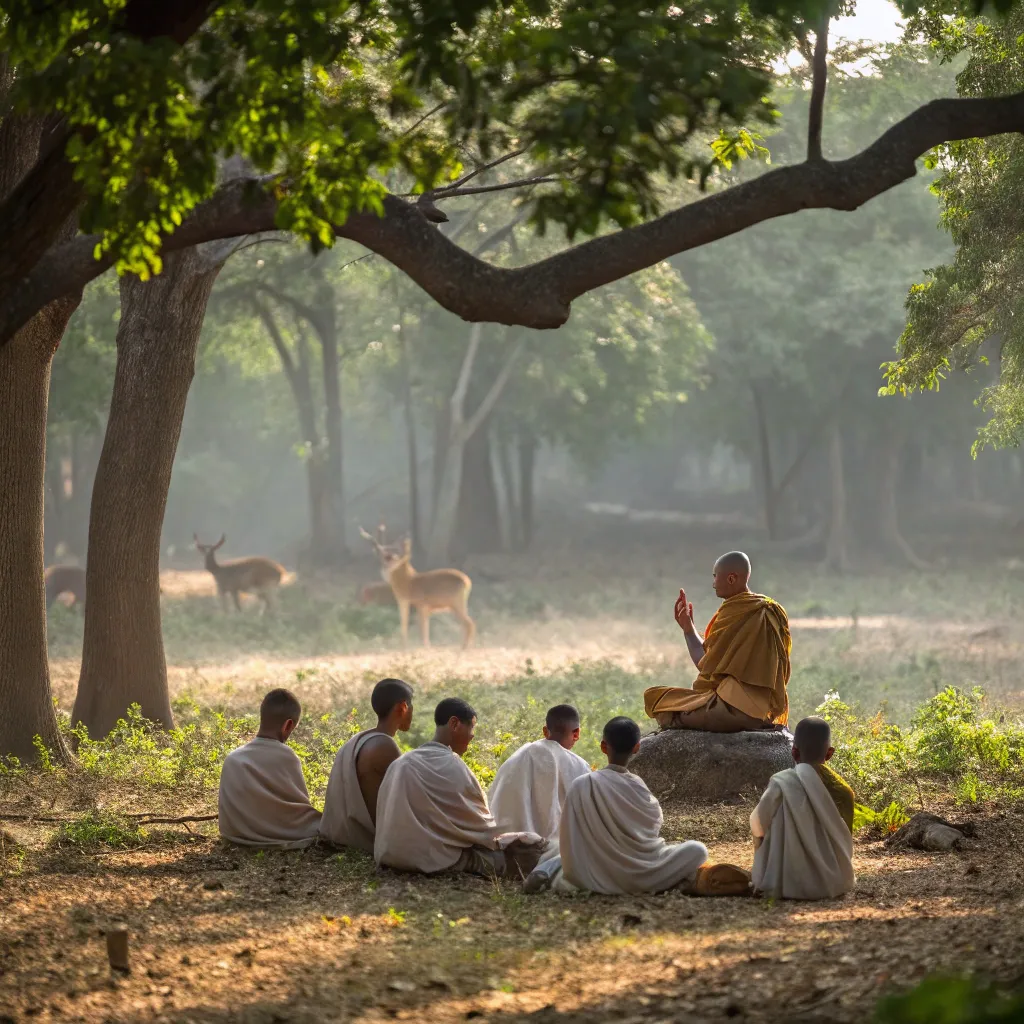
The Buddha’s first teaching was delivered to five former companions in the Deer Park of Isipatana. Here, he introduced the Four Noble Truths, marking the birth of Buddhism as a spiritual tradition. His words were clear, practical, and universal—aimed not at deities or scholars, but ordinary people.
The Four Noble Truths:
- 1. Life involves suffering
- 2. Suffering is caused by craving
- 3. Cessation of suffering is possible
- 4. There is a path (the Noble Eightfold Path) to end suffering
Key Events and Concepts in the Buddha’s Life
| Event or Concept | Description |
|---|---|
| Birth in Lumbini | Born under a sal tree in May; a miraculous and symbolic event |
| The Four Sights | Aging, illness, death, and asceticism—triggers of spiritual inquiry |
| The Great Renunciation | Abandoning royal life in search of truth |
| Austerity and Realization | Practiced extreme self-denial before discovering its limits |
| Enlightenment in Buddhagaya | Achieved enlightenment under the Bodhi tree |
| First Teaching in Isipatana | Introduced the Four Noble Truths and set the wheel of Dharma in motion |
| Formation of the Sangha | A community of monks and nuns devoted to spreading the Buddha’s teachings |
Embracing the Sangha and the Robe
A Spiritual Community Is Born
With each teaching, the Buddha gained more followers who wished to live by his example. This marked the creation of the Sangha, a community of monks and nuns who committed to a life of simplicity, study, and compassion. They traveled far and wide, preserving the Dharma through chants, memory, and early scripts.
The Symbol of the Robe
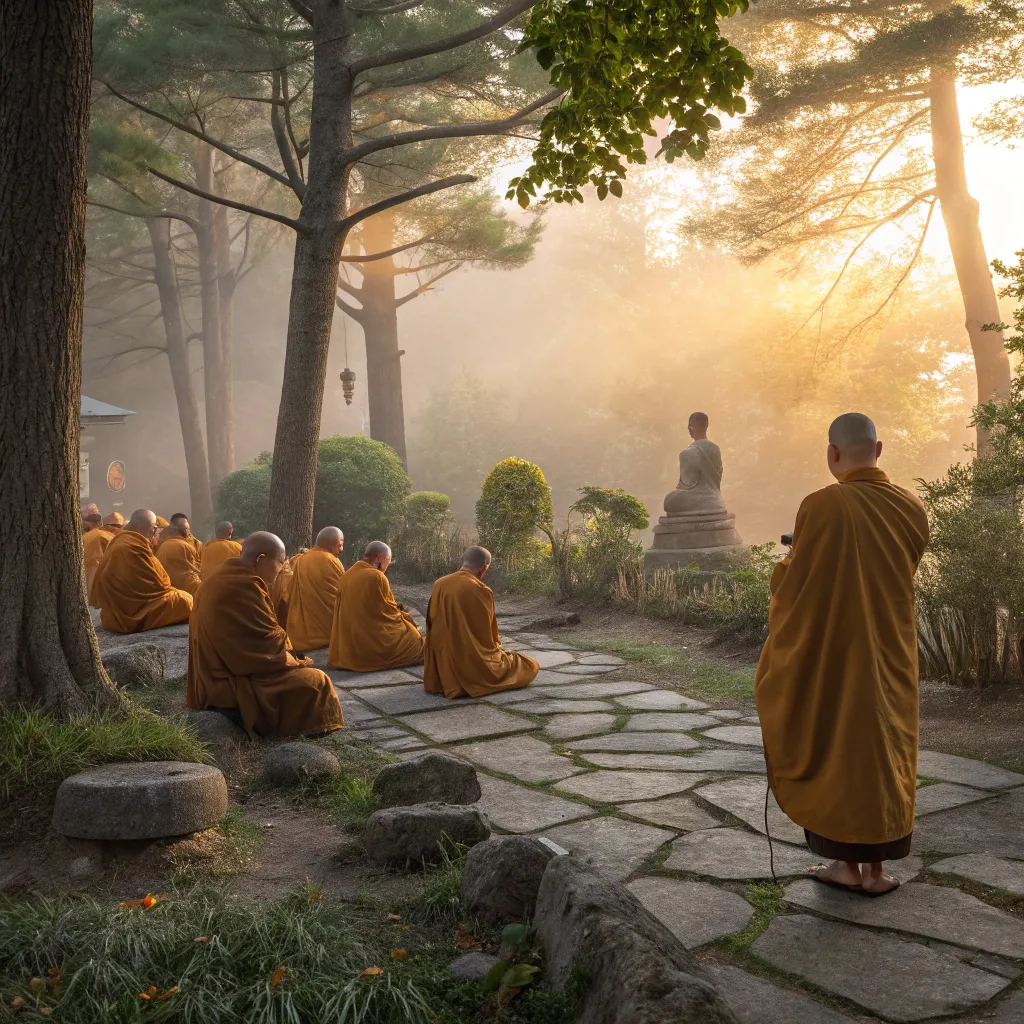
Wearing a monk’s robe wasn’t just about clothing—it was a statement of intention. It reflected a life free from material attachments, a visual cue of spiritual discipline and unity among practitioners.
The Inner Journey
Meditation as a Living Practice
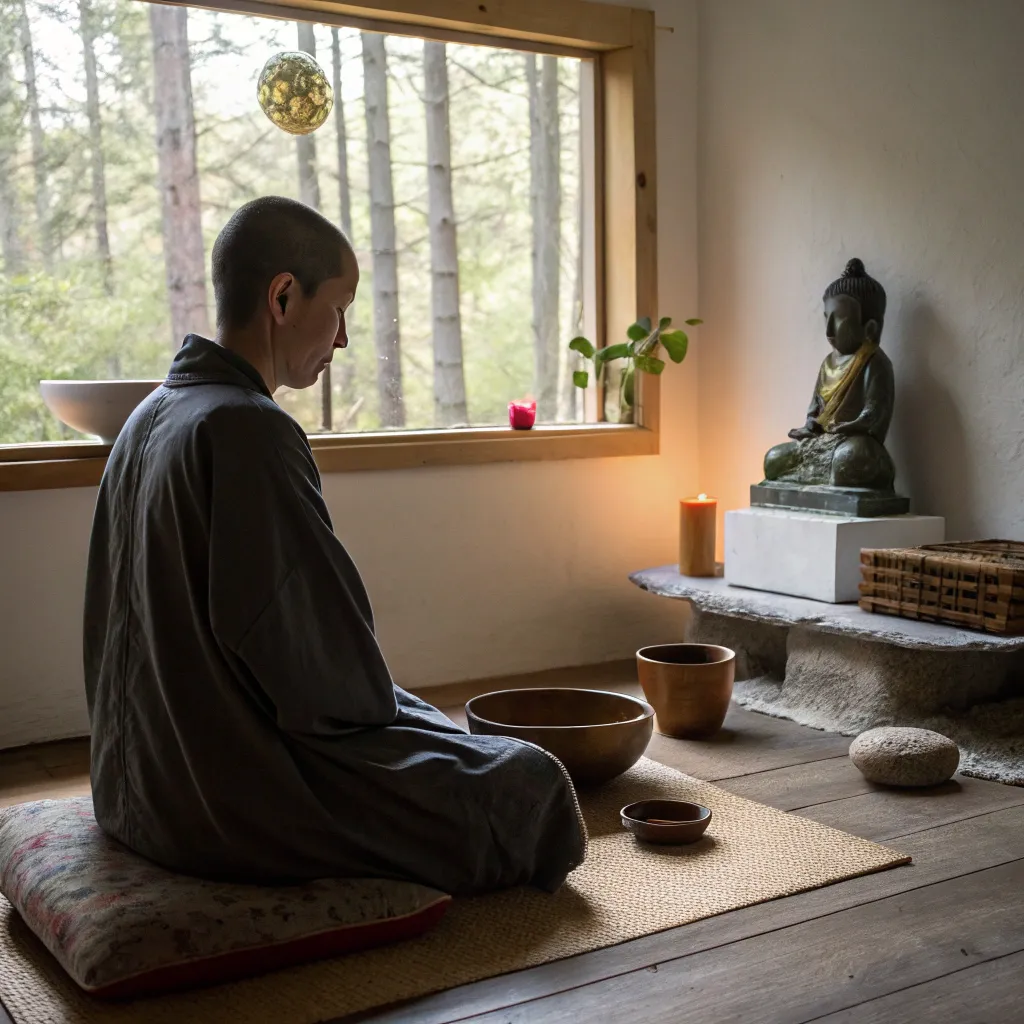
While the Buddha’s life story sets the foundation for understanding suffering and liberation, it’s through meditation that his teachings truly come alive for individuals today. Meditation was not just part of the Buddha’s journey—it was the very method that led him to enlightenment. Over time, he shared a variety of mental disciplines designed to sharpen awareness, foster compassion, and transform perception.
Meditation Themes: A Toolkit for Mindful Living
In Buddhist practice, meditation themes or “objects of meditation” guide practitioners in exploring their minds and understanding reality. Far from being abstract or esoteric, these themes offer practical ways to develop clarity, equanimity, and insight in everyday life.
Self-Reflection Through the Ten Recollections
The Power of Remembering What Matters
Among the most accessible themes are the Ten Recollections, or Anussati, which include contemplation on the Buddha, the Dharma (teachings), and the Sangha (spiritual community). Others focus on ethics, generosity, and even death. These recollections encourage a deeper alignment with one’s values and purpose.
For example, Buddhanussati—the recollection of the Buddha—invites practitioners to reflect on his qualities, instilling confidence and aspiration to follow his path.
By regularly engaging with these themes, practitioners nurture mindfulness and foster a sense of peace that extends far beyond the meditation cushion.
The Ten Foul Objects: Facing Mortality
Impermanence as a Gateway to Wisdom
Another set of practices—less commonly discussed yet profoundly transformative—involves meditating on the Ten Foul Objects (Asubha). These are visualizations of the body’s decay, including images like a bloated corpse or bones scattered in a charnel ground. While confronting, these meditations are meant to break the illusion of permanence and release attachment to physical form.
It’s not about morbidity—it’s about clarity. These reflections remind us that all things change and that clinging to the body as a source of identity leads to suffering.
The Ten Kasinas
Exploring the Elements
Concentration Through the Physical and Conceptual World
The Ten Kasinas offer another fascinating path. These are meditative objects tied to natural elements like earth (pathavi), water (apo), fire (tejo), wind (vayo), or conceptual elements such as light (aloka) and space (akasa).
By meditating on a kasina, the practitioner trains the mind to focus deeply, often reaching profound states of absorption (jhana). This method fosters inner stillness and a greater sense of interconnection with the universe.
| Meditation Theme | Purpose | Example |
|---|---|---|
| Buddhanussati | Cultivate devotion and faith | Reflecting on Buddha’s virtues |
| Anapanassati | Enhance mindfulness through breathing | Observing the breath cycle |
| Asubha (Foul Objects) | Understand impermanence and reduce attachment | Visualizing bodily decay |
| Pathavi Kasina | Build concentration and elemental awareness | Focusing on a clay disk |
| Aloka Kasina | Explore mental clarity through light | Visualizing brightness |