Sacred Spaces in Buddhism: Devotion, Shrines, and Symbolic Legacy
Understanding Buddhist Devotion Through Sacred Space
Buddhism approaches worship in a deeply unique way. Unlike many spiritual traditions that center around the physical adoration of a figure, the Buddha himself discouraged worship of his image during his lifetime. He promoted reverence not through statues or likenesses, but through presence, mindfulness, and respectful offerings.
So how did sacred Buddhist spaces—so prominent across Asia today—come to be? Let’s take a closer look at the Buddha’s own teachings, the practices of his followers, and how these evolved into a lasting architectural and spiritual legacy.
The Buddha’s Perspective on Worship
Reverence Without Representation
Rather than encouraging direct idolization, the Buddha advised his followers to focus on practice over personhood. While he did not support physical representations of himself, he welcomed offerings placed in front of his dwelling when he was absent. This subtle yet meaningful gesture allowed followers to express respect without creating a cult of personality.
Guiding the Construction of Shrines
Recognizing the need for a dedicated spiritual focus, the Buddha outlined three types of shrines:
- Those containing bodily relics (such as ashes or bones),
- Those with objects he had used, and
- Memorials, meant to honor events or ideas.
Importantly, he emphasized that personal memorials should only be established after his passing, a principle that would shape the future of Buddhist worship spaces.
The Bodhi Tree: A Living Symbol
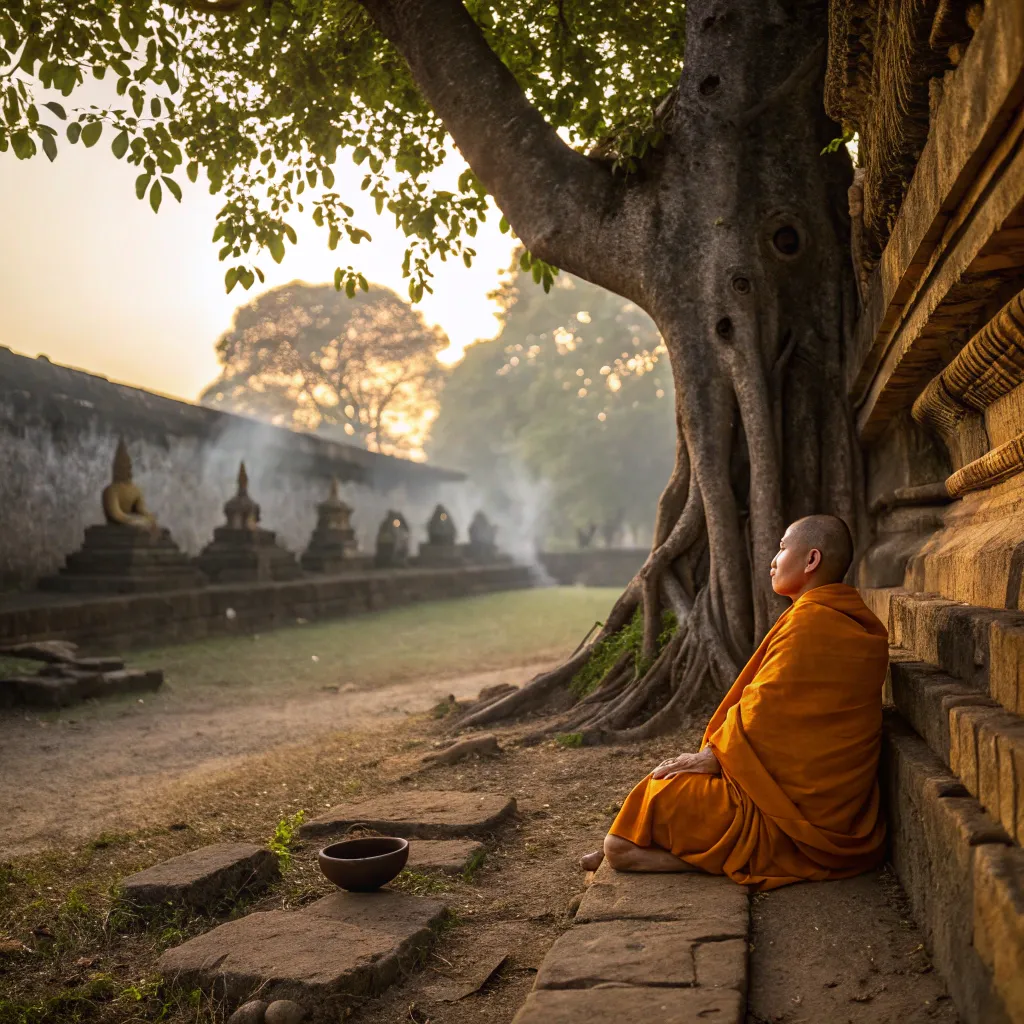
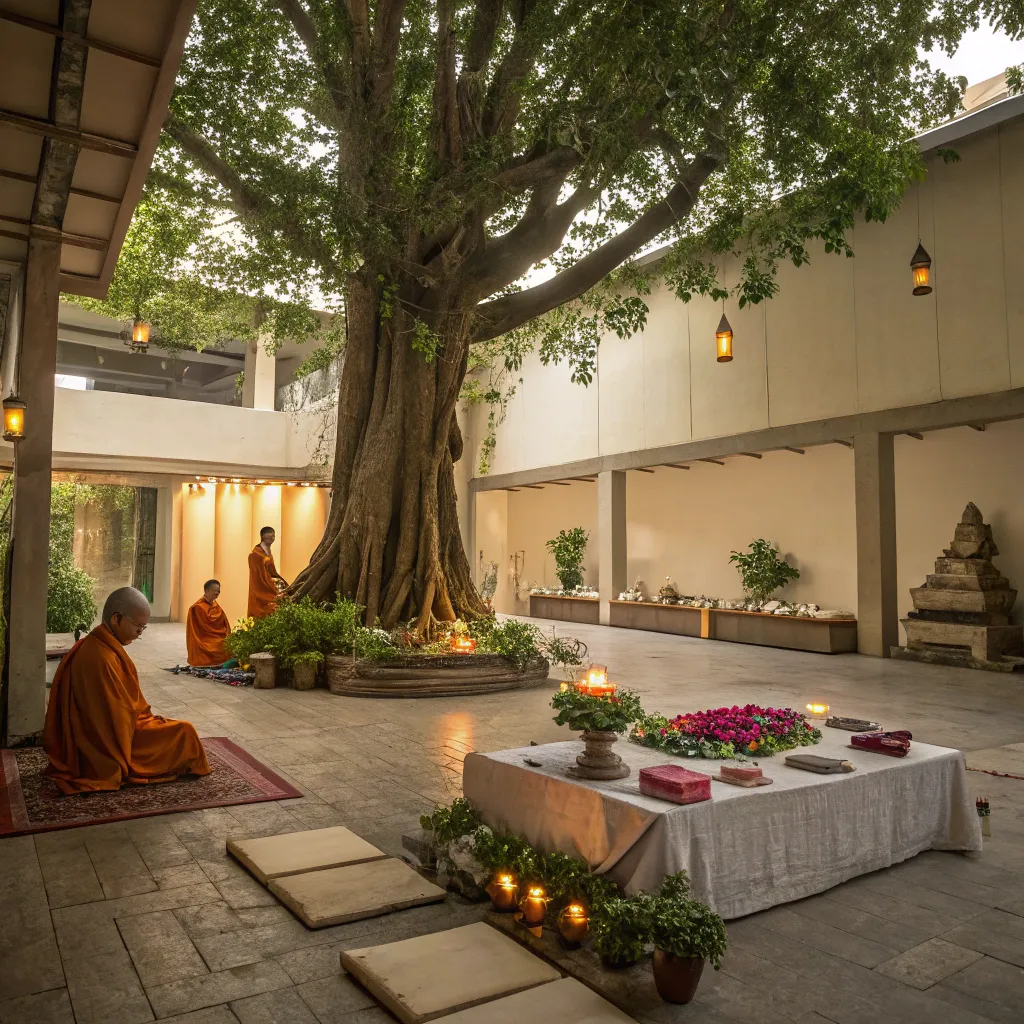
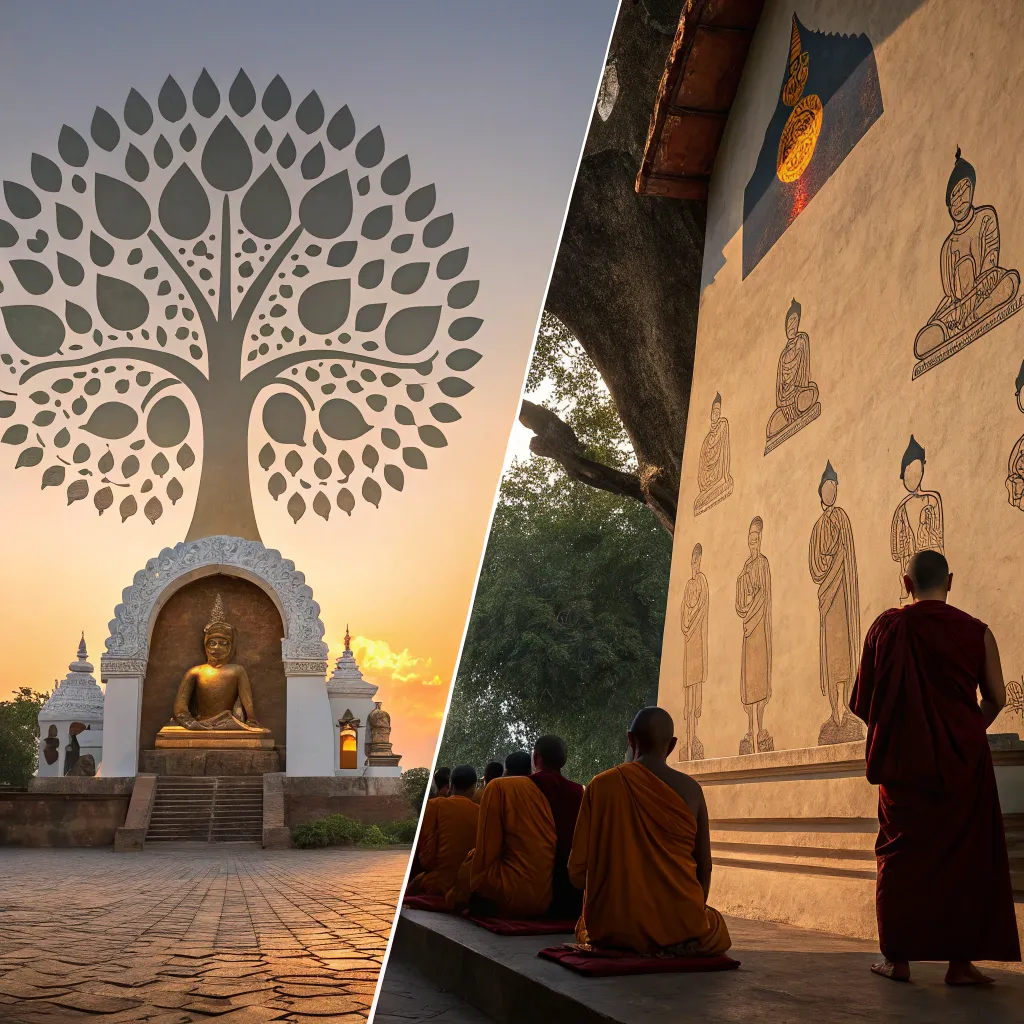
One of the earliest symbolic shrines in Buddhism wasn’t made of stone—it was a tree. In response to a concern raised by his attendant Ananda, the Buddha approved the planting of a Bodhi tree at the entrance of the monastery. This tree, echoing the one under which he attained enlightenment, became a lasting symbol of his presence and teachings.
Even today, Bodhi trees are revered at Buddhist temples worldwide, providing not only shade but a living anchor for meditation and offerings.
Honoring the Enlightened: The Rise of Stupas
Who Deserves a Stupa?
The Buddha didn’t only speak of his own veneration. He clearly outlined four types of individuals worthy of having stupas built in their honor:
- Fully Enlightened Buddhas,
- Silent Buddhas (those who reach enlightenment without teaching),
- Noble Disciples, and
- Universal Monarchs (ideal rulers in Buddhist cosmology).
This instruction established a broader tradition of commemoration in Buddhism—extending honor not just to one enlightened figure, but to a whole lineage of wisdom holders.
From Earth Mounds to Spiritual Icons
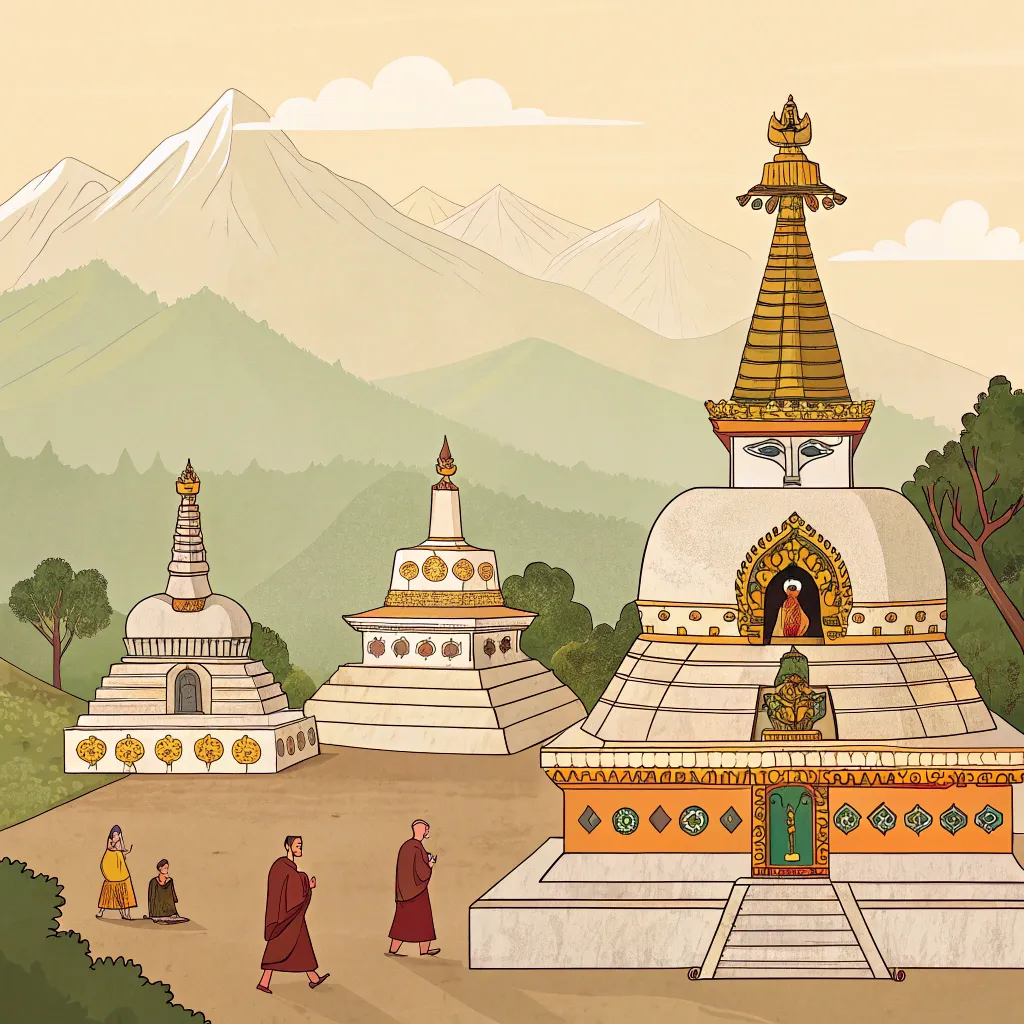
What began as simple burial mounds evolved into intricate architectural monuments known as stupas. These structures, rich in symbolism and geometry, serve both as spiritual centers and visual metaphors for the path to enlightenment. Their design often reflects the journey from the base of human experience to the crown of spiritual awakening.
Four Sacred Pilgrimage Sites in Buddhism
Before entering Mahaparinirvana (final nirvana), the Buddha designated four places as pilgrimage destinations—each tied to a pivotal moment in his spiritual journey:
| Pilgrimage Site | Significance | Present-Day Location |
|---|---|---|
| Lumbini | Birthplace of Siddhattha (Buddha) | Nepal |
| Bodhgaya | Site of Enlightenment | Bihar, India |
| Sarnath | First Sermon delivered | Uttar Pradesh, India |
| Kusinara | Place of Mahaparinirvana | Uttar Pradesh, India |
These sacred sites attract millions of pilgrims annually, offering a spiritual path that retraces the Buddha’s life, lessons, and liberation.
Table: Core Elements of a Traditional Stupa
| Part of the Stupa | Symbolic Meaning |
|---|---|
| Base | Earth, grounding in human life |
| Dome | Water, the vastness of spiritual growth |
| Spire (Harmika) | Fire, representing wisdom and transformation |
| Umbrella | Air, protection and the canopy of Dharma |
| Pinnacle | Space, the final stage of liberation |
A Legacy Built on Symbolism
From Aniconic to Iconic Expression
In early Buddhism, representations of the Buddha were aniconic—meaning he was depicted through symbols like footprints, the Bodhi tree, or an empty seat under an arch. These conveyed presence without portraiture.
However, after his death, a shift began. Devotees longed for a more personal connection. Over time, Buddhism embraced iconic images, giving rise to the statues and frescoes we recognize today—each becoming a visual channel for teachings on vinyana and the nature of reality. This evolution didn’t replace earlier symbols; rather, it expanded the visual language of Buddhist devotion.
The Global Journey of Buddhism and Its Symbols
From India to the World: Buddhism on the Move
As Buddhism spread beyond India, it encountered diverse cultures along the Silk Road, gradually adapting to new artistic traditions and belief systems. This cross-cultural exchange gave birth to remarkable artistic fusions, especially in regions like Gandhara, where Hellenistic art merged with Buddhist themes. Here, the first realistic human images of the Buddha emerged, featuring Greco-Roman facial features, curly hair, and togas instead of robes.
This blend wasn’t superficial—it allowed the core teachings of compassion, detachment, and mindfulness to resonate with new audiences through a familiar visual language.
Adapting to Local Traditions
As Buddhism moved into Central Asia, China, Japan, Southeast Asia, and beyond, it absorbed local symbols, materials, and ritual practices. For example:
- In Tibet, Buddhist practices embraced detailed mandalas and ornate thangka paintings.
- In Japan, Zen aesthetics emphasized minimalism, silence, and nature-inspired design.
- In Thailand, vibrant stupas and gilded Buddha statues became central to temple architecture.
These adaptations ensured the Dharma remained accessible and meaningful, without compromising its essence.
Rituals, Symbols, and the Fabric of Buddhist Practice
Symbols That Speak Across Generations
Symbols in Buddhism are not mere decorations—they’re narrative tools. A lotus flower, for instance, isn’t just beautiful; it reflects the journey of rising above suffering. The wheel of Dharma reminds practitioners of the Eightfold Path. These symbols are often incorporated into daily practice through prayer flags, altars, ritual tools, and temple architecture.
Crafted with purpose, these symbols transmit wisdom, even in silence.
The Role of Rituals
Rituals in Buddhism serve both personal and communal functions. They create rhythm, structure, and reflection in spiritual life. From chanting sutras and lighting incense, to circumambulating a stupa, These acts are not empty repetitions but mindful engagements that reinforce values like gratitude, awareness, impermanence, and insights into vinyana—the Buddhist concept of consciousness and mental formations.
Rituals are especially powerful when tied to community events, such as Asalha Puja, Vesak celebrations, or the consecration of a new shrine. These moments blend individual practice with shared devotion, reinforcing unity and spiritual connection.
Giving and Generosity: The Heart of the Sangha
One significant expression of generosity occurs during Asalha Puja, which commemorates the Buddha’s first teaching of the Dharma. This observance is marked by candlelight processions, chanting, and communal offerings, reinforcing the deep connection between wisdom and giving.
At the center of Buddhist living is the concept of dāna, or generosity. Far from being a passive act, giving is a transformative practice—a way to dissolve attachment, cultivate compassion, and support the Sangha (spiritual community).
This giving manifests in many ways:
- Donating food to monks,
- Volunteering in temples,
- Offering flowers, incense, or symbolic items at shrines,
- Supporting communal building projects like stupa restoration.
In Buddhist societies, generosity sustains the faith—not only materially, but ethically and spiritually.
Why Sacred Spaces Still Matter Today
Whether it’s a massive stupa in Sri Lanka or a small altar in a New York apartment, sacred spaces give form to the invisible structure of faith. They serve as anchors for practice, especially during days like Asalha Puja, reminding us of values that transcend time and geography.
In a world increasingly driven by speed and distraction, these spaces offer:
- Stillness and clarity,
- Opportunities for reflection,
- A way to ground the spiritual journey in physical experience.
Through shrines, symbols, and acts of devotion, the teachings of the Buddha remain vibrantly alive—not just in texts, but in the real, tangible world around us.
Table: Common Buddhist Symbols and Their Meanings
| Symbol | Meaning | Common Use |
|---|---|---|
| Lotus Flower | Purity, spiritual growth | Temple art, altars, mantras |
| Bodhi Tree | Enlightenment, presence of the Buddha | Shrine backgrounds, temple courtyards |
| Dharma Wheel | Path to enlightenment | Flags, carvings, stupa ornaments |
| Empty Throne | Buddha’s spiritual authority without image | Early symbolic art, altar decoration |
| Flame | Wisdom, inner illumination | Ritual lamps, murals, stupa symbols |
Final Thoughts: Devotion Beyond Form
Sacred spaces also support meditation on concepts like vinyana, helping practitioners reflect on the continuity of consciousness and its role in the cycle of rebirth.
Buddhism teaches that true reverence doesn’t rely on statues or grand buildings. It’s expressed through mindful acts, sincere offerings, and symbols that guide the inner journey. From the planting of the first Bodhi tree to the majestic stupas that rise across the Buddhist world, sacred spaces have evolved as reflections of both faith and creativity.
They remind us that devotion is a path, not a destination—one walked with humility, generosity, and deep respect for the timeless teachings of the Buddha.